by Accurate Machine & Tool Team | Oct 13, 2026 | Aerospace Compliance & Quality, Aerospace Machining
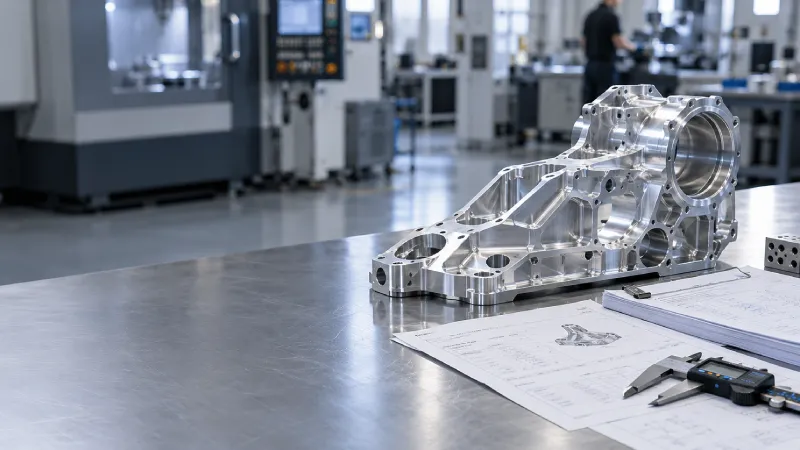
An aerospace part without documentation is just a piece of metal with no traceable history — and traceability is often the actual product, as much as the part itself. Quick summary: Aerospace parts typically ship with material certifications, a Certificate of...
by James Wright | Oct 10, 2026 | Aerospace Compliance & Quality, Aerospace Machining, Manufacturing Technology
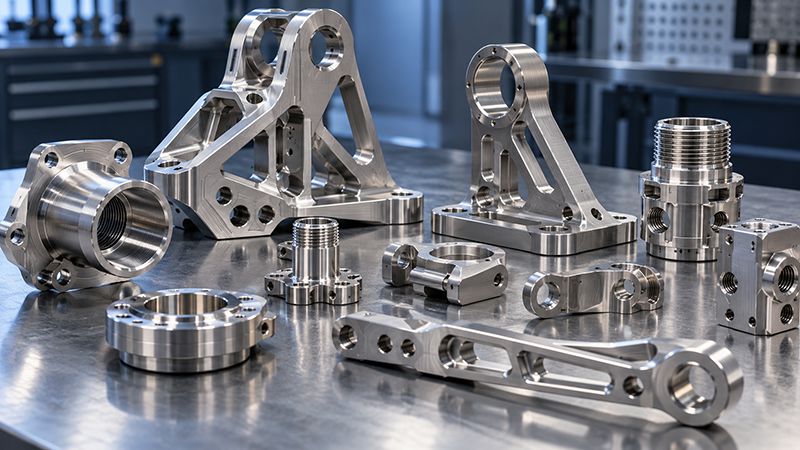
Passivation removes free iron from the surface of stainless steel parts so the chromium oxide layer can form properly and do its job — resist corrosion. The process is simple. The spec confusion isn’t. Aerospace drawings call out ASTM A967, ASTM A380, or sometimes...
by Accurate Machine & Tool Team | Oct 5, 2026 | Aerospace Machining
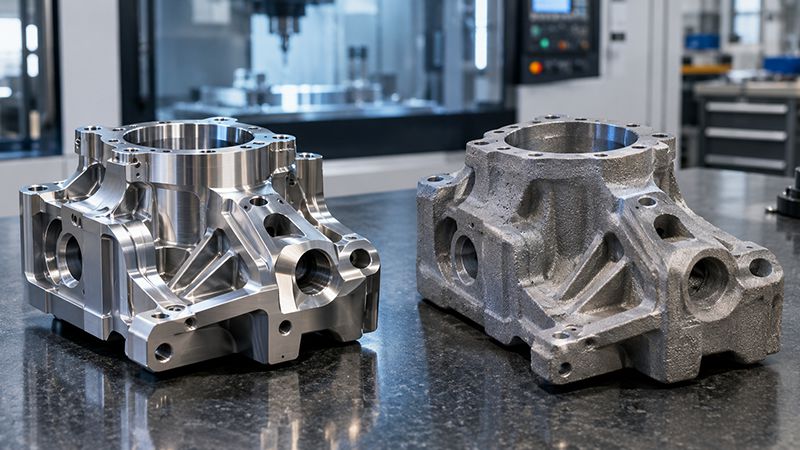
Casting and machining solve different problems. Casting is efficient at producing complex shapes in volume once tooling exists; machining is efficient at producing precise features without tooling investment, at any volume. Quick summary: Casting requires upfront...
by James Wright | Oct 2, 2026 | Aerospace Machining, CNC Machining, Manufacturing Technology
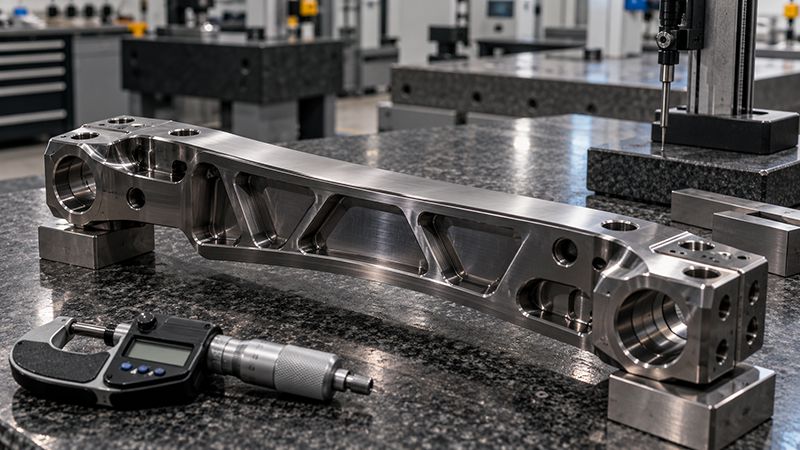
Heat treatment changes dimensions. Not by a lot — but enough to push a tight-tolerance feature out of spec if nobody planned for it. The part goes into the oven at ±0.0005” and comes out at ±0.002” because it grew, shrank, warped, or all three. The heat treater met...
by James Wright | Sep 25, 2026 | Aerospace Machining, CNC Machining, Manufacturing Technology
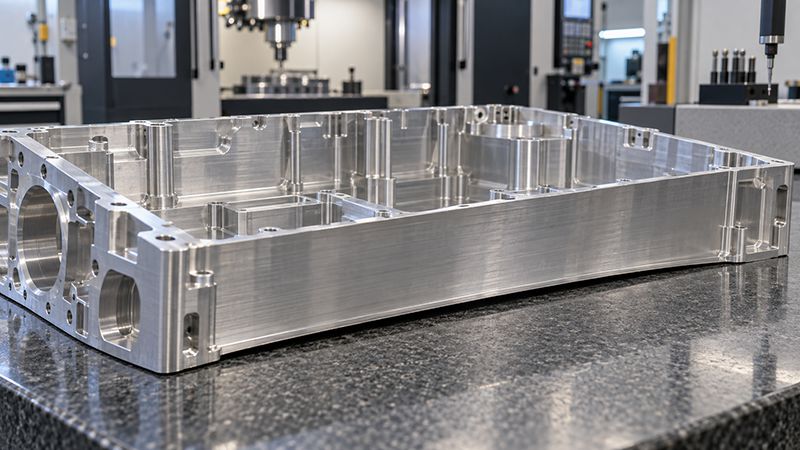
When you remove material from a billet, the stress that was locked in the raw stock redistributes. On a simple commercial bracket, nobody notices. On a thin-wall aerospace housing machined from a forging, the part can bow, twist, or spring open the moment it comes off...
by James Wright | Sep 18, 2026 | Aerospace Machining, CNC Machining, Manufacturing & Cost Estimating, Manufacturing Technology
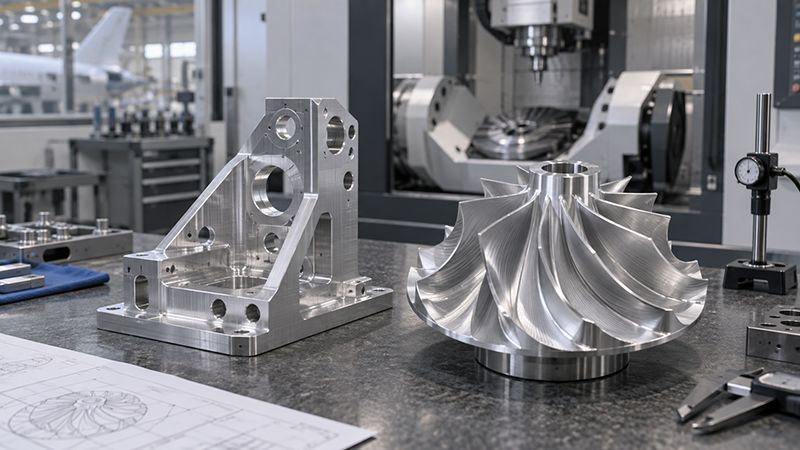
The sales pitch for 5-axis is that it does everything in one setup. That’s true. What the sales pitch doesn’t mention is that 5-axis programming takes longer, the machine costs more per hour, and a lot of parts that get quoted on 5-axis would be cheaper on a 3-axis...
