
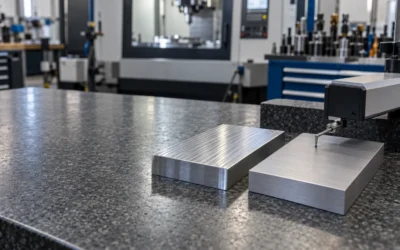
How to Specify Surface Finish on a Drawing: Ra, Rz, and What Machinists Actually Need
Most drawings call out surface finish as “Ra 63” or “32 μin” — and most machinists know what that means. The problems start when the drawing uses Rz instead of Ra, when the callout doesn’t specify...
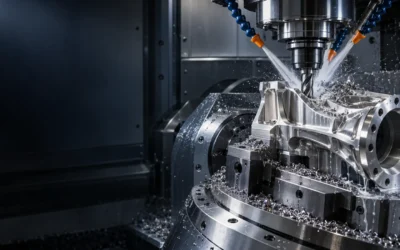
Machining Titanium: Why It Costs More and How to Reduce It
Titanium costs more to machine than aluminum or steel — typically 3–5x more per hour of cutting time, not counting the higher material cost. The reasons are physical, not arbitrary: titanium is a...
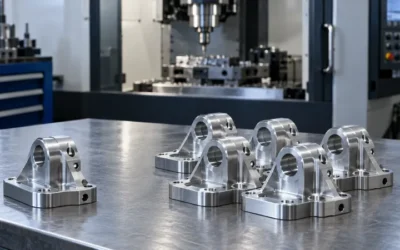
Prototype-to-Production Manufacturing for Defense Contractors
Defense programs move from prototype to production differently than commercial products — configuration control and documentation requirements tighten at each stage, not just volume. Quick summary:...

Why Your CNC Supplier Needs CMMC Certification (and What Level)
If you’re buying machined parts for a DoD program, your supplier’s cybersecurity posture is now a contractual requirement — not a preference. CMMC (Cybersecurity Maturity Model Certification)...
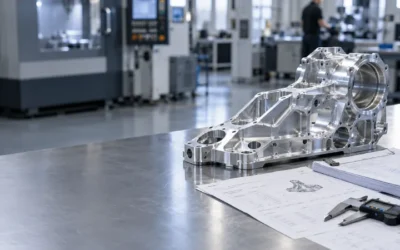
What Documentation Should You Expect With Aerospace Parts?
An aerospace part without documentation is just a piece of metal with no traceable history — and traceability is often the actual product, as much as the part itself. Quick summary: Aerospace parts...
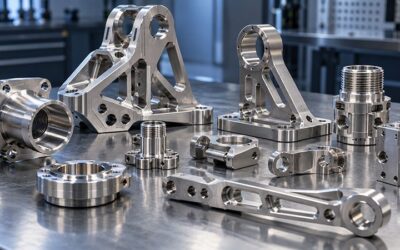
Passivation for Aerospace Stainless Steel: ASTM A967 vs A380
Passivation removes free iron from the surface of stainless steel parts so the chromium oxide layer can form properly and do its job — resist corrosion. The process is simple. The spec confusion...
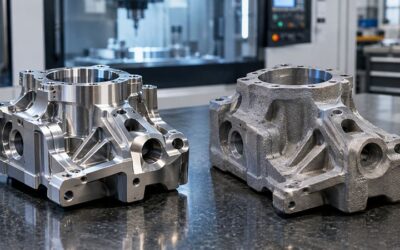
Machining vs. Casting: Choosing a Process for Aerospace Components
Casting and machining solve different problems. Casting is efficient at producing complex shapes in volume once tooling exists; machining is efficient at producing precise features without tooling...
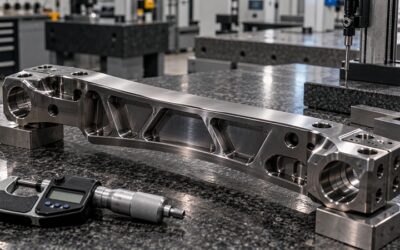
What Happens to Your Tolerances After Heat Treatment?
Heat treatment changes dimensions. Not by a lot — but enough to push a tight-tolerance feature out of spec if nobody planned for it. The part goes into the oven at ±0.0005” and comes out at ±0.002”...
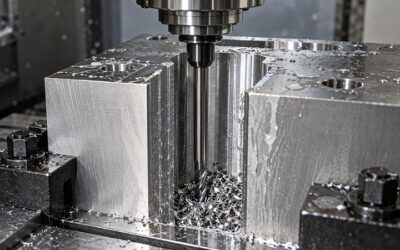
How Deep Can a CNC Mill Cut a Pocket?
Pocket depth is limited less by the machine and more by the tool — a long, thin end mill deflects and chatters long before most machines run out of Z-axis travel. Quick summary: Practical pocket...