
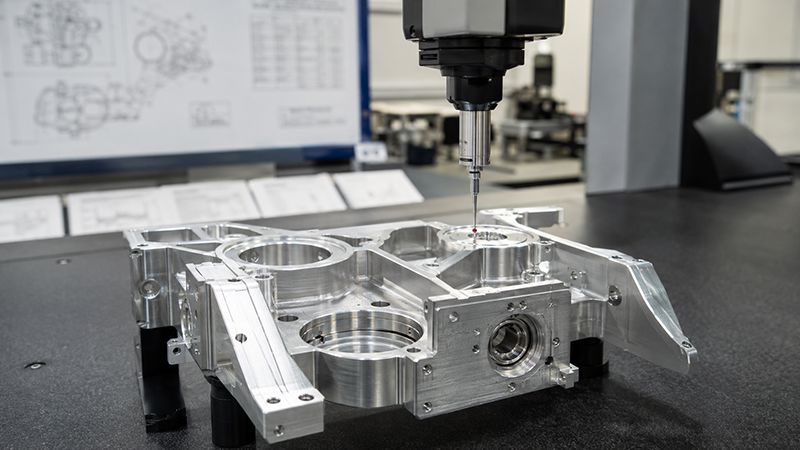
A First Article Inspection isn’t a quality-control formality — it’s the documented proof that a part, a process, and a drawing all agree with each other before production begins.
Quick summary: AS9102 defines the aerospace industry’s First Article Inspection Report format, requiring a complete dimensional and characteristic-by-characteristic comparison between the manufactured part and its engineering drawing before full production is approved. It’s typically required on new parts, new suppliers, or after any significant process change.
What Does an FAI Actually Verify?
Every dimension and characteristic on the drawing gets measured on an actual produced part and recorded against the drawing requirement. It’s not a sampling exercise — it’s a complete, documented match.
When Is an FAI Required?
Common triggers: a new part number, a new supplier producing an existing part, a significant design change, or a break in production of more than a defined period. Program-specific requirements can extend this list.
What Does an AS9102 Report Actually Contain?
Three forms, typically: Part Number Accountability, Product Accountability (material and process certifications), and Characteristic Accountability (the dimension-by-dimension comparison, often keyed directly to a bubbled drawing).
Why Does This Matter Beyond Compliance?
An FAI catches disagreements between the drawing and the actual manufacturing process before they become a production-scale problem. It’s cheaper to find a discrepancy on one part than on a full production run.
FAQ
Does every aerospace part require an FAI? Not universally — it depends on the customer’s quality requirements and the specific triggers noted above, but it’s standard for new or changed parts in aerospace/defense supply chains.
Who performs the FAI — the customer or the manufacturer? The manufacturer typically performs and documents it, subject to customer review and approval.
Source: SAE AS9102. Related: What Drives the Cost of Precision CNC Aerospace Parts?