
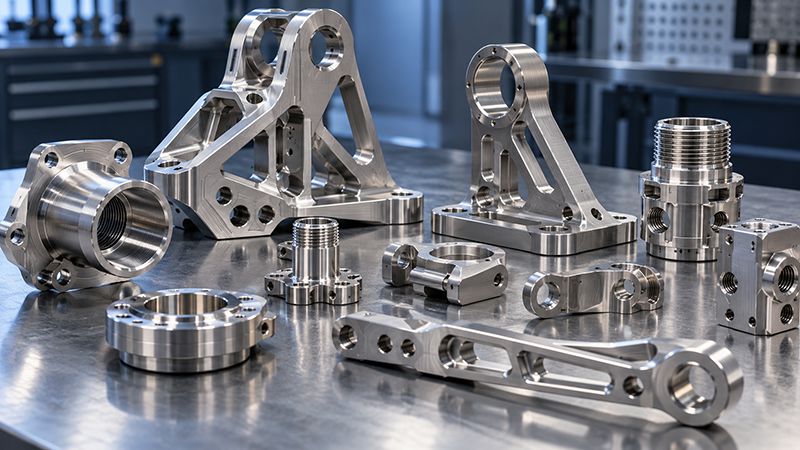
Passivation removes free iron from the surface of stainless steel parts so the chromium oxide layer can form properly and do its job — resist corrosion. The process is simple. The spec confusion isn’t. Aerospace drawings call out ASTM A967, ASTM A380, or sometimes both, and they don’t do the same thing.
Quick Summary: ASTM A967 specifies the passivation process itself — which acid bath to use, concentration, temperature, time, and how to verify the surface is clean afterward. ASTM A380 is broader — it covers cleaning, descaling, and passivation of stainless steel parts, with passivation being one section of a larger document. If the drawing calls A967, the shop follows a specific passivation procedure and runs a verification test (copper sulfate, salt spray, or high humidity). If it calls A380, the shop may need to address cleaning and descaling steps before passivation. Many drawings call both.
What Does Each Standard Actually Cover?
| ASTM A967 | ASTM A380 | |
|---|---|---|
| Scope | Passivation of stainless steel parts — process and verification | Cleaning, descaling, and passivation — full surface preparation |
| Acid baths specified | Nitric acid (multiple concentrations), citric acid | References A967 for passivation specifics |
| Verification tests | Copper sulfate, salt spray, high humidity, water immersion | References A967 tests; adds visual and wipe-test methods |
| When to use | Drawing calls out passivation specifically | Drawing calls out cleaning/descaling/passivation as a package |
| Typical aerospace callout | “Passivate per ASTM A967, Practice C, with copper sulfate test” | “Clean and passivate per ASTM A380 and A967” |
Why Does It Matter Which Standard the Drawing Calls?
Because the verification test is what determines whether the part passes or fails — and A967 specifies multiple test options with different sensitivity levels. If the drawing says “passivate per ASTM A967” without specifying which practice (A through H) or which verification test, the shop has to choose — and a conservative shop will default to the most stringent test, which may reject parts that a less stringent test would pass.
The copper sulfate test (per ASTM A967) is the most common aerospace verification. A solution of copper sulfate and sulfuric acid is applied to the passivated surface. If free iron is present, copper deposits visibly on the surface within 6 minutes. Clean surface = pass. Copper deposits = fail, re-passivate and retest.
Does Passivation Change Dimensions?
No. Passivation is a chemical cleaning process, not a coating. It removes a microscopic layer of surface contamination (free iron, shop dirt, cutting fluid residue) and allows the native chromium oxide to regenerate. There is no measurable dimensional change. This is one of the reasons passivation is preferred over plating or coating for tight-tolerance stainless steel aerospace parts where dimensional stability matters.
Frequently Asked Questions
Is passivation the same as electropolishing? No. Passivation cleans the surface chemically without removing base metal. Electropolishing removes a thin layer of base metal (typically 0.0002”–0.001”) to smooth the surface and improve corrosion resistance beyond what passivation alone achieves. Electropolishing produces a brighter finish and better corrosion performance, but it does remove material and change dimensions slightly.
Can I passivate carbon steel? No. Passivation relies on chromium content to form the protective oxide layer. Carbon steel and low-alloy steel don’t have enough chromium. They require other corrosion protection (plating, coating, painting).
Which stainless alloys passivate best? 300-series (304, 316) and precipitation-hardened (17-4PH, 15-5PH) passivate well. 400-series martensitic steels (410, 440C) passivate but are more sensitive to the acid concentration — too aggressive a bath can etch the surface. The A967 practice tables specify which acid concentrations work for which alloy families.
Written by James Wright, CEO of Accurate Machine & Tool.
Sources
[1] eMachineShop — surface finishing capabilities overview, emachineshop.com
[2] ASTM A967 — Standard Specification for Chemical Passivation Treatments for Stainless Steel Parts
[3] ASTM A380 — Standard Practice for Cleaning, Descaling, and Passivation of Stainless Steel Parts